















Three Lanes, No Rest
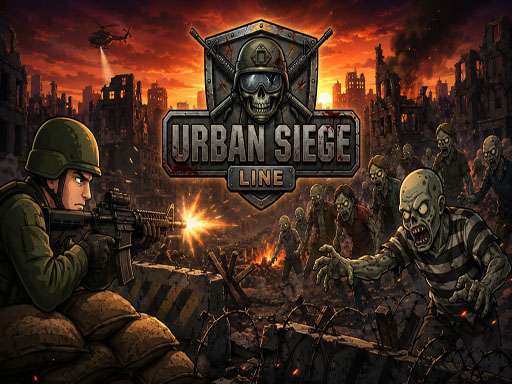
Urban Siege Line is a lane-based 2D shooter that doesn't waste time. You stand on one of three horizontal paths, and zombies come at you from the right. You move up and down between lanes, shoot, switch weapons, and activate specials. It's straightforward, but the speed forces you to stay alert.
The core loop works: enemies enter from one side, you blast them before they reach you. But because you can only be in one lane at a time, you have to read the wave patterns and decide which threat is most urgent. A slow zombie in your lane is easy. A fast one in the lane above while you're reloading? That's where the tension lives.
Weapons, Support, and the Occasional Explosion
You get three weapon slots (keys 1, 2, 3), ranging from pistols to shotguns to automatic rifles. Each feels different enough that you'll want to switch based on range and crowd density. The shotgun clears a lane fast but leaves you vulnerable during reload. The rifle lets you pick off distant enemies but struggles when they're close.
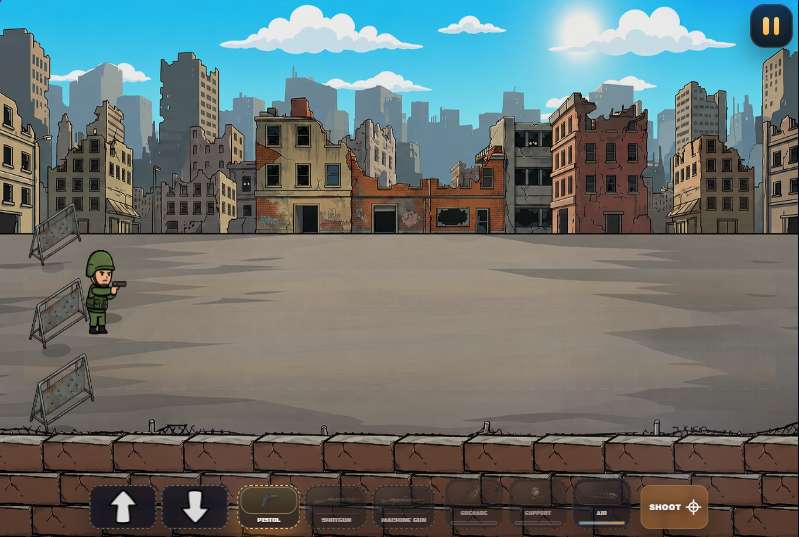
Then there are the specials. Air strike (A key) wipes a lane clean. Support squad (D) drops a temporary ally who shoots for you. Grenades (F) are good for groups. These aren't just flashy — they're necessary once the waves thicken. Managing cooldowns and knowing when to use them instead of hoarding them is a real decision.
The mobile version swaps keyboard keys for on-screen buttons, which works fine but feels a bit cramped on smaller screens. Desktop is definitely the smoother experience.
What Stands Out (and What Gets Old)
What I like most is how the game makes you think about lane priority. It's not just aim and shoot. You have to watch all three lines and decide which enemy is the biggest threat right now. A zombie that's about to reach your position is more dangerous than the one still far away, even if it's bigger. That split-second decision-making keeps things from feeling purely mechanical.
That said, the game does get repetitive after a while. The enemies are mostly variations of shambling zombies with different speeds and health pools. There aren't many real surprises after the first few missions. The challenge comes from quantity, not variety. If you're looking for deep enemy design or evolving tactics, this isn't it.
But for a browser game you can jump into for ten minutes? It works. The pacing is tight enough that you won't get bored quickly, and the upgrade system (buying better weapons between missions) gives you a small sense of progression. It's not deep, but it's satisfying.
Who Should Play This?
If you like lane-based tower defense or simple shooters where reaction time matters more than strategy, Urban Siege Line is a good pick. It's also fine for short sessions — the missions are short, and you can pause anytime. Just don't expect endless depth. It's a solid, focused arcade experience that knows what it is.
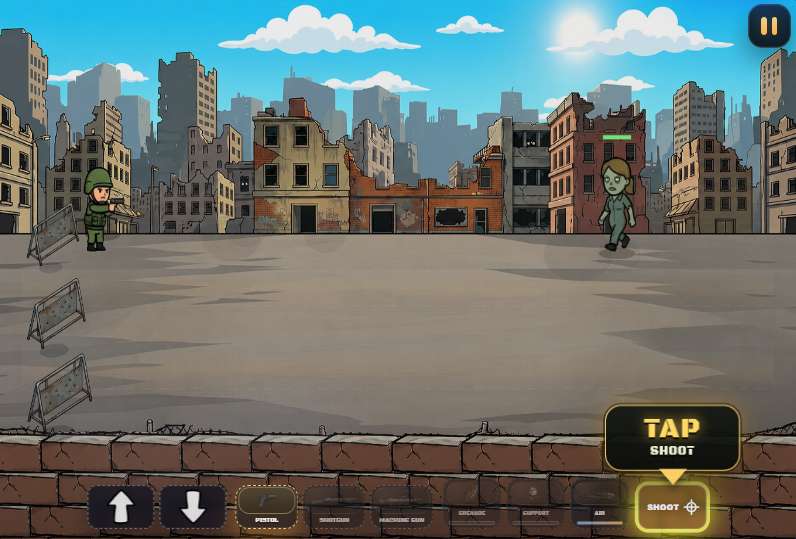
The controls are responsive, the visuals are clean enough, and the action stays brisk. That's more than a lot of browser shooters manage.
Final Thoughts
Urban Siege Line works best as a quick, low-pressure browser game. It may not hold everyone for long sessions, but it does a solid job at delivering a simple and accessible play experience.